 Axolotl Den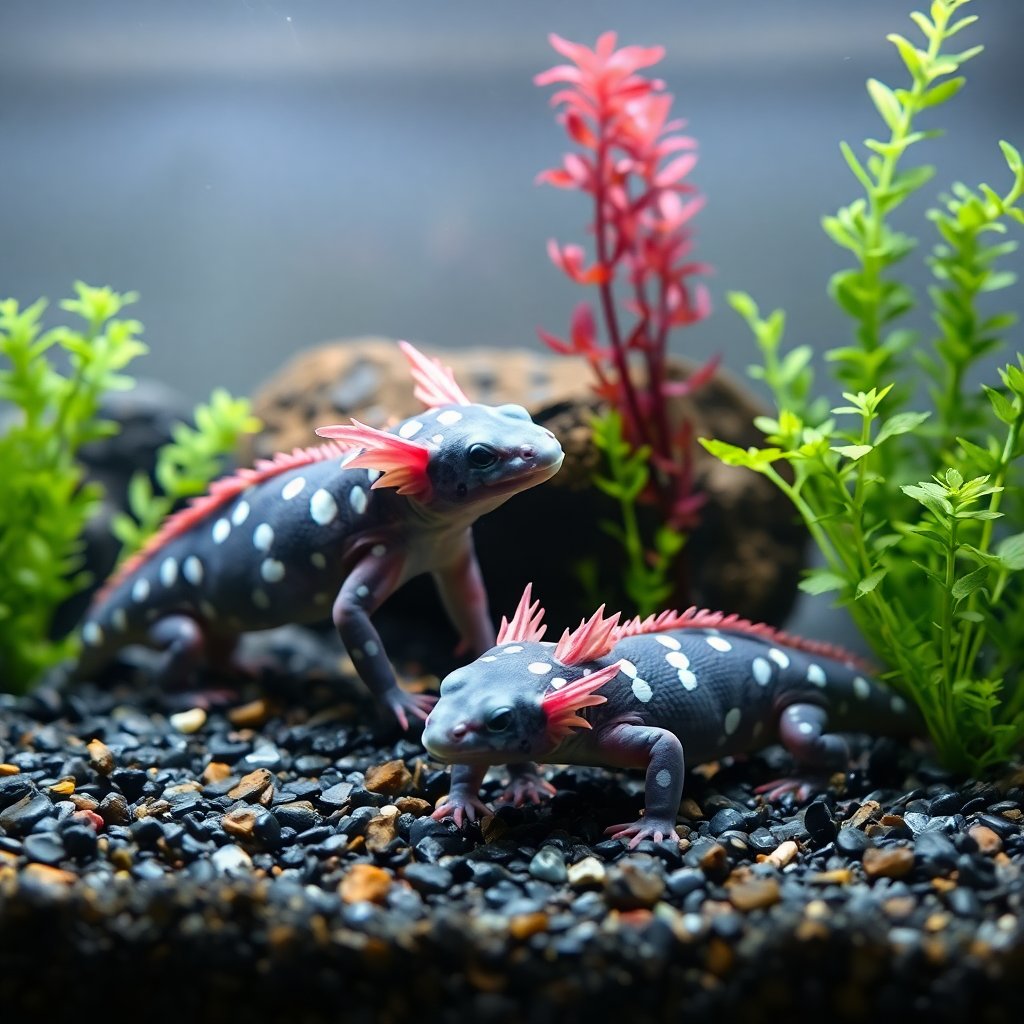
Few axolotl questions get answered with as much confident, conflicting advice as this one. Walk into one forum and keepers will tell you two axolotls are perfectly happy roommates. Walk into another and you will hear horror stories about missing legs and bitten-off gills. Both groups are describing something real. The truth is that axolotls can share a tank under specific conditions, but cohabitation is one of the most common ways well-meaning owners end up with injured animals.
This guide lays out exactly when two axolotls can live together, when they never should, and how to build a setup that stacks the odds in your favor.
This is general keeper-to-keeper information, not medical advice. If an axolotl is injured or unwell, contact an exotics vet who treats amphibians.
The short answer
Adult axolotls of similar size can often cohabit peacefully in a large enough tank. That is the best-case version. But axolotls are not social animals in the way a shoaling fish or a pair of guinea pigs are. They do not form bonds, they do not get lonely, and they gain no health benefit from a tankmate. Cohabitation is something keepers do for their own enjoyment or for space reasons, not because the animal needs company.
Because there is no upside for the axolotl, the entire decision comes down to risk management. If you can house two axolotls separately, that is always the safer choice. If you want them together, you need to meet every condition below, not just some of them.
Why cohabitation goes wrong
Axolotls explore the world with their mouths. They are ambush predators with poor eyesight that lunge at movement, and a tankmate's waving gills, slender toes, and twitching tail all look a lot like food. This is not aggression in the way we usually mean it. A nip is often just a feeding mistake. The problem is that the consequences are the same whether the intent was hostile or not.
Nipped gills and limbs are the usual injuries. The good news is that axolotls are famous regenerators and can regrow lost toes, limbs, gill stalks, and even parts of organs. That remarkable ability is the subject of serious scientific study, and you can read a solid overview in the Wikipedia entry on the axolotl. The bad news is that every open wound is an infection risk, regeneration drains the animal's energy, and a repeatedly bitten axolotl lives under chronic stress that quietly undermines its health.
Cannibalism is the extreme end. Among larvae and juveniles it is well documented and common, which is exactly why babies must be separated early. Adults rarely consume a tankmate outright, but a large axolotl absolutely can and sometimes will swallow a much smaller one, or bite a limb clean off. Size mismatch is the single biggest predictor of a disaster.
When two axolotls should NOT live together
Some pairings are a bad idea no matter how large the tank or how careful the keeper. Keep these apart, full stop.
Juveniles and babies. Any axolotl under roughly 5 inches should be housed individually or in carefully size-matched, closely watched groups by experienced breeders. Young axolotls nip constantly and cannibalize readily. This is non-negotiable for babies.
Size mismatches. If one animal can fit part of another in its mouth, do not house them together. A good rule is that tankmates should be within about an inch of each other in length, and ideally raised together.
Mixed sexes you are not ready to breed. A male and female housed together will eventually breed, and females can lay hundreds of eggs that exhaust them if they spawn repeatedly. Unplanned breeding is stressful for the female and leaves you with a flood of larvae to care for. If you want to understand what that actually involves, our axolotl breeding tank setup guide walks through the real commitment before you stumble into it by accident.
Any other species. Fish, shrimp, snails, and other amphibians are not safe tankmates. Fish nip axolotl gills and carry parasites, most fish prefer warmer water than axolotls tolerate, and small fish and shrimp simply become food. The clean, cool, bare-ish environment axolotls need is wrong for nearly everything else you might want to add.
When cohabitation can work
If you still want two axolotls together, the viable version looks like this: two adults of the same size, same sex (or both spayed of the intent to breed), raised together or introduced carefully, in a tank with generous space and multiple hides. Get all of those right and many keepers run peaceful pairs for years.
The space requirement is where most people fall short. A single axolotl needs a minimum of around 20 gallons, and each additional animal adds roughly 10 gallons of real swimming room, not just water volume. Floor space matters more than height because axolotls live on the bottom. A long 40-gallon breeder footprint is a far better two-axolotl home than a tall 40-gallon column. If you are starting from scratch, our complete axolotl tank setup guide covers how to size and equip the tank correctly before any animals go in.
When you are ready to upgrade, a long, low tank with a large glass footprint is the target.
→ Shop long aquarium tanks on Amazon
Setting up for safe cohabitation
Space alone is not enough. The layout of the tank does a surprising amount of the work in preventing nips.
Give each axolotl its own hide, plus one spare. The formula is one hide per animal plus one extra, so a pair needs at least three. Hides let a stressed or resting axolotl retreat out of sight, which cuts down on the random lunging that starts fights. Caves, PVC fittings, and ceramic tunnels all work as long as they are smooth with no sharp edges and wide enough that an animal cannot wedge itself.
→ Shop axolotl caves and hides on Amazon
Feed every axolotl individually and to satisfaction. A huge share of tankmate injuries happen at feeding time, when two hungry animals converge on the same worm. Target-feed each axolotl with long feeding tongs, make sure both are full, and never let them compete over a dropped piece. A well-fed axolotl is far less likely to mistake a gill for a meal.
→ Shop aquarium feeding tongs on Amazon
Keep the substrate safe for both. With more animals cruising the bottom, the risk of gravel ingestion and impaction multiplies. Use fine sand or a bare bottom, never gravel small enough to swallow. If you are unsure which to pick, review the common setup errors in our rundown of axolotl tank mistakes that cause stress and illness.
Oversize the filtration and keep the water cold. Two axolotls produce roughly twice the waste, so your filter and water-change routine need to scale with the bioload. Axolotls need cool water, generally in the low 60s Fahrenheit, and crowding plus warm water is a fast track to stress and sickness.
Introducing axolotls to each other
Never just drop a new axolotl into an established tank. A newcomer should first spend two to four weeks in a separate quarantine tank so you can confirm it is healthy, eating, and parasite-free before it ever meets your resident animal. Skipping quarantine is how a single sick addition wipes out a whole tank.
When you do introduce them, watch closely for the first several days. Feed heavily, keep hides plentiful, and separate the animals immediately at the first sign of repeated nipping. Keep a cycled backup tub or tank ready at all times, because the honest reality of cohabitation is that you must be prepared to separate permanently on short notice. If you are not willing to keep that backup running, you are not ready to house two axolotls together.
Do axolotls get lonely?
No. This is the myth that drives most impulse cohabitation decisions, so it is worth stating plainly. Axolotls are solitary ambush predators with no social structure. A single axolotl in a well-maintained tank is not sad, bored, or lonely, and adding a companion does nothing for its wellbeing. If anything, a solo animal lives a lower-stress life because it never has to compete for food, space, or a hiding spot.
If you enjoy the look of a multi-axolotl tank, that is a perfectly valid reason to attempt it carefully. Just be honest that it is for you, not for them, and let that framing keep your expectations realistic.
The bottom line
Two similarly sized adult axolotls of the same sex can share a large, cool, well-equipped tank with enough hides and careful individual feeding, and many do so peacefully for years. But cohabitation carries real risk, delivers no benefit to the animals, and demands a backup tank you are genuinely ready to use. Babies, juveniles, size mismatches, unplanned breeding pairs, and other species all belong in the "do not" column. When in doubt, house them separately. It is the choice that never backfires.
Affiliate disclosure: some links above are Amazon affiliate links, and purchases made through them may earn this site a small commission at no extra cost to you. It never changes what we recommend.
As an Amazon Associate we earn from qualifying purchases. This article contains affiliate links; if you buy through them we may earn a small commission at no additional cost to you.