 Axolotl Den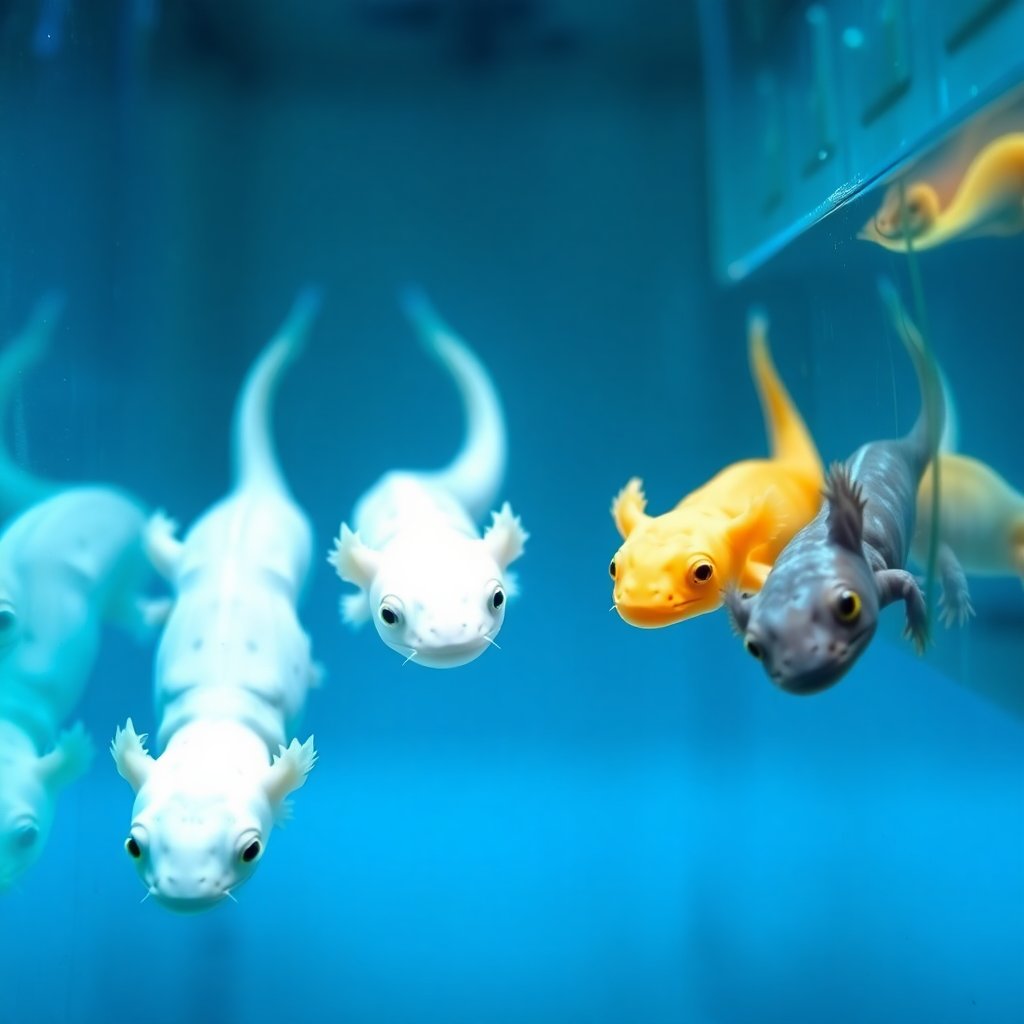
One of the first things people notice when they discover axolotls is the variety of colors. Walk into a reputable breeder's setup and you'll see white ones with red gills, dark gray ones with speckles, golden ones, and everything in between. These aren't different species — they're different color morphs of the same animal, Ambystoma mexicanum. Here's what each one is, how it happens, and what to look for when choosing.
Understanding Axolotl Coloration
Axolotl color is determined by four types of pigment cells (chromatophores):
- Melanophores — brown/black pigment (melanin)
- Xanthophores — yellow/orange pigment
- Iridophores — reflective/iridescent cells (create sheen and sparkle)
- Leucophores — white/reflective cells
Each color morph results from a different combination of these cells being expressed, reduced, or absent entirely. Selective breeding over decades of captive keeping has amplified some of these variations well beyond what exists in the wild population.
Wild-Type
The wild-type coloration is what axolotls look like in nature: dark brown or olive with a speckled pattern of iridescent cells. Their belly is lighter than their dorsal surface. Wild-types have all four chromatophore types expressed normally, creating the natural camouflage pattern suited for the lake bottom environments of Xochimilco, Mexico.
Wild-types are less commonly kept than leucistics or albinos, partly because lighter morphs are easier to observe and photograph, and partly because captive breeding has favored more dramatic colorations. However, many experienced keepers consider wild-types to be the most beautiful morph when well-cared-for — their iridescent speckles catch light in a way that's genuinely striking in a planted tank.
Care note: Wild-types are often considered the hardiest morph in captivity, likely because they're genetically closest to the natural population.
Leucistic (White with Dark Eyes)
Leucistic axolotls are the ones most people picture when they think of the species — white or pale pink body, pink/red gills, and dark eyes. They're not true albinos: they have reduced but not absent pigmentation. Their dark eyes are the key distinguishing feature from true albinos.
Leucistics are enormously popular in the hobby because they're visually striking, their full red gill stalks photograph beautifully, and they're easy to observe behavior and health signs in (visible redness, spots, or discoloration show up clearly against white skin).
Some leucistics develop small dark spots over time — called "dirty leucistics" in the hobby. This is a natural expression of their partial pigmentation and is completely harmless, though it surprises some owners expecting pure white skin throughout their lives.
Albino (White with Red Eyes)
True albinos have no melanin at all — white body, pink/red gills, and distinctly red or pink eyes. The eye color comes from blood vessels showing through iris tissue that has no pigment to mask them. This is the classic albino phenotype seen across many animal species.
Albinos are slightly more sensitive to bright light than other morphs due to the lack of protective eye pigmentation. They do better with some shading in their tank, dimmer lighting, or floating plants that create natural shadow areas. In a well-lit bare tank with no cover, they'll spend more time hiding from the light.
Their gills are often spectacular — bright red, full, and highly visible. Albinos in good health with clean, well-oxygenated water tend to have the most dramatic gill presentation of any morph.
Golden Albino
Golden albinos are albinos with a golden or distinctly yellowish tint to their skin. The coloration comes from xanthophores (yellow/orange pigment cells) expressing without the usual melanin overlay to darken them — so the yellow shows through prominently. Their eyes are typically gold or pink, and their gills range from pink to vibrant orange-red.
Golden albinos have become increasingly common in the hobby over the last decade and are among the most visually striking morphs available. The combination of golden skin, pale pink gills, and pink eyes gives them an almost otherworldly appearance. They share the light sensitivity of white albinos and benefit from the same dimmer, shaded setup.
→ Shop axolotl tank lighting (low-intensity, adjustable) on Amazon
Melanoid
Melanoid axolotls are the opposite of albinos — they have extra melanin and reduced or absent iridophores. They're dark gray to jet black, with no yellow pigment expression and no iridescent sheen. Their belly may be somewhat lighter than their back but is still very dark compared to other morphs.
Melanoids can appear almost matte-black, which is striking in a well-lit tank against light substrate. They're less common than leucistics but have a dedicated following. The dark coloration can make it harder to detect skin discoloration or early fungal issues, so regular close observation is especially important.
Copper
Copper morphs are a less common variation that expresses reduced melanin with yellowish-brown pigmentation — they appear a warm tan or copper-bronze color with pink gills. They're often confused with golden albinos but are genetically distinct, having a different combination of chromatophore expression. Coppers have darker eyes than golden albinos.
They're less available than the major morphs but worth seeking from specialized breeders if their unique warm coloration appeals to you.
Chimera
Chimeric axolotls occur when two embryos fuse during early development — the result is one animal with two distinct color patterns, split roughly down the midline. Half the animal might be leucistic, the other half wild-type. This is a natural developmental accident, not a result of breeding selection.
True chimeras are extremely rare and typically cannot reproduce (the two cell lines don't mix reliably in the germline). They occasionally appear in large breeding operations and can be dramatic to observe — literally half one color and half another.
Mosaic
Mosaic axolotls are similar to chimeras but caused by different developmental events (somatic mutation rather than embryo fusion). Mosaics have patches of different colors scattered across their body in irregular patterns rather than a clean split down the middle. Also very rare, also non-reproducible via breeding.
Both chimeras and mosaics are "found, not made" — they happen by chance in large breeding operations and cannot be intentionally produced.
GFP (Green Fluorescent Protein)
Some axolotls in the hobby carry a gene for green fluorescent protein, originally introduced through university genetic research. Under UV/blacklight, they glow green. Under normal light, they look like any other morph.
GFP can be present in any color morph — a GFP leucistic glows green under UV just like a GFP wild-type. It doesn't affect their health, behavior, or care requirements. GFP axolotls are common enough in the hobby that many breeders sell them without specifically advertising the trait.
→ Shop UV blacklights for axolotl tanks on Amazon
Choosing a Morph: What to Consider
All morphs have identical care requirements. Whichever color catches your eye, the tank, water parameters, food, and husbandry are exactly the same. Choose based on what you'll enjoy looking at — this is a 10–15 year commitment.
For visual impact and photography: Leucistic, golden albino, albino For unique appearance: Melanoid, copper, GFP For a natural look: Wild-type For rarity: Chimera, mosaic (if you can find one)
Whatever you choose, make sure you're getting from a reputable breeder who health-tests their animals. Ranavirus has moved through the hobby and can be present in animals that appear completely healthy. A healthy axolotl of any morph is worth more than a spectacular-looking sick one.
Before bringing any morph home, see our axolotl tank setup guide and cycling guide to make sure your tank is ready.
Morph Comparison Table
| Morph | Eye Color | Skin Color | Gill Color | Light Sensitivity | Availability | |---|---|---|---|---|---| | Wild-type | Dark/gold | Olive-brown speckled | Red-brown | Low | Common | | Leucistic | Dark | White/pale pink | Pink-red | Low | Very Common | | White Albino | Pink/red | White | Pink-red | High | Very Common | | Golden Albino | Gold/pink | Golden-yellow | Pink-orange | High | Common | | Melanoid | Dark | Dark gray-black | Dark | Low | Moderate | | Copper | Dark | Tan/copper | Pink | Low | Less Common | | GFP | Varies | Varies (glows under UV) | Varies | Varies | Common |
FAQ
Do axolotl morphs have different temperaments? No. Color morph has no relationship to temperament or behavior. Individual personality varies (some axolotls are bold and interactive, others are shy), but this isn't correlated with color.
Can axolotls change color? Not dramatically in the way some animals do. Axolotls can appear slightly lighter or darker based on stress, temperature, and health. Significant color change (going pale, gray patches) usually indicates health or water quality issues. Leucistics do sometimes develop dark spots as they age — this is normal.
Are certain morphs harder to care for? Albino morphs (white albino, golden albino) are somewhat more sensitive to bright light and should have dimmer tanks or floating plant cover. All other aspects of care are identical across morphs.
How do I know what morph my axolotl is? Color and eye color are usually sufficient. Dark eyes = leucistic (not albino). Pink/red eyes = albino variant. Dark body = melanoid or wild-type. Golden/yellow tint with pink eyes = golden albino. If you're unsure, post a photo to r/axolotls — the community can usually identify the morph quickly.
What's the rarest morph? True chimeras and mosaics are the rarest — they can't be bred for intentionally. Among intentionally bred morphs, copper and mosaic-patterned axolotls are less common than leucistic or albino.
Where to Find Reputable Breeders
Avoid pet store axolotls when possible — they often come from mass breeding operations with no health screening. Find breeders through:
- The r/axolotls subreddit vendor list
- Caudata.org forums
- The Axolotl Society
- Local aquarium society classifieds
Reputable breeders will answer health questions, tell you where their breeding stock came from, and usually offer a health guarantee. They'll also be specific about the morph they're selling.
→ Shop axolotl tank starter supplies on Amazon
As an Amazon Associate we earn from qualifying purchases. This article contains affiliate links; if you buy through them we may earn a small commission at no additional cost to you.